
When to Schedule a Roof Inspection in the Coachella Valley
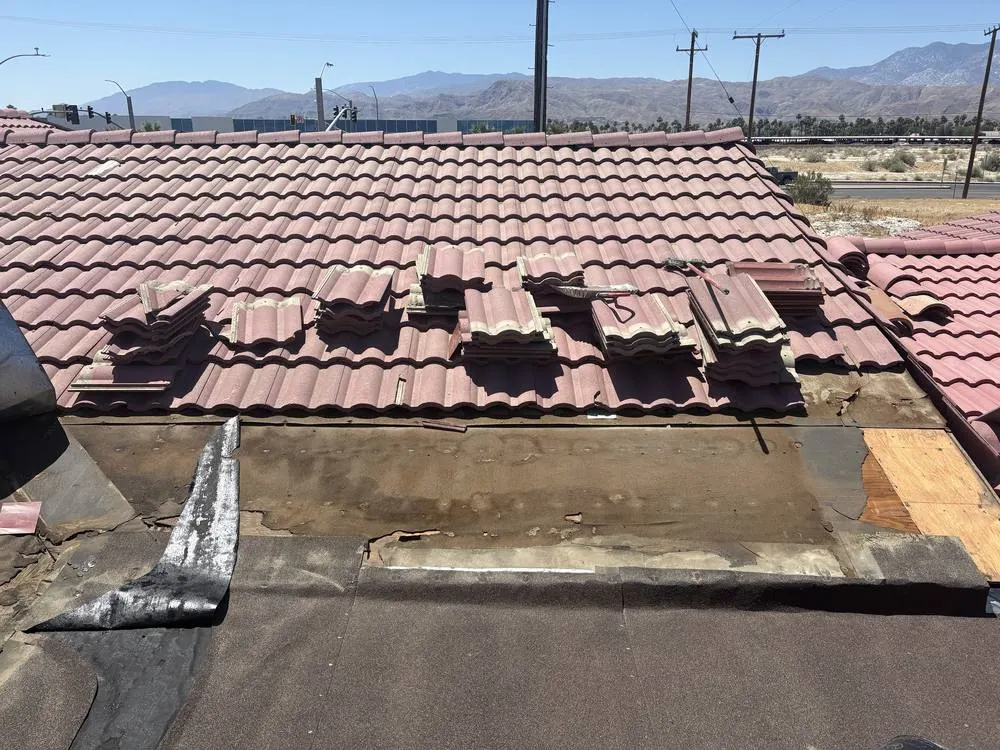
October and November may be a practical window for a roof inspection in the Coachella Valley. Summers here are typically hot and dry, and rain is more likely from winter on, so a check in the fall lets you find and fix problems before water tests the roof. If you already see a ceiling stain, a cracked tile or a leak that keeps coming back, do not wait for a calendar month. Call sooner.
Why inspect before winter rain
A small opening can be hard to spot on a dry roof. A lifted seam, a gap at a pipe or a drain that does not clear may go unnoticed until a storm reveals a problem. Water may then reach the attic or the ceiling.
An inspection before the wet months looks for the things that let water in later: visible wear, loose or slipped tiles, open seams on a flat roof, and trouble around roof penetrations (the vents, pipes, skylights and equipment curbs that pass through the roof). Fixing one of these on a dry day is usually simpler than chasing a leak after the fact.
Desert heat also does its own slow damage. Sun and big temperature swings between day and night make roofing materials expand and contract, which can loosen sealants and stress joints over the hot months. A fall inspection may reveal damage left by summer conditions.
What a roof inspection should cover
A good inspection is more than a walk across the roof. Ask the roofer to look at the surface, the flashing and the joints. Flashing is the thin metal or membrane that seals edges, walls and penetrations, and joints are the sealed connections where one piece of roofing meets another. Leaks can start at one of these spots rather than in the middle of a field of roofing.
What else gets checked depends on the roof type:
| Roof type | What to have checked |
|---|---|
| Tile | Broken, slipped or missing tiles, the underlayment, ridge and hip tile bedding, flashing at walls and penetrations |
| Flat (cap sheet or TPO) | Seams, drains and scuppers, flashing at parapet walls and equipment, blisters or splits, areas where water ponds |
| Any roof | Signs of past leaks, loose sealant, debris holding moisture, attic or ceiling stains below problem spots |
Tile roofs
Tile sheds most of the water you see, but the underlayment beneath it is the layer doing the final waterproofing work. Underlayment is the water-shedding layer under the tile. Ask whether the roofer can see its condition at any spot where tile is lifted or missing. Our tile roof work covers both concrete and clay tile.
Flat roofs
Flat roofs live or die by drainage. Water that sits for a long stretch can stress seams and the membrane, so the inspection should note any low spots, clogged drains and standing water marks. If you have a flat roof with a cap sheet or TPO surface, ask the roofer to point out each seam and penetration they checked.
A useful inspection window in the Coachella Valley
Coachella Valley summers are typically hot and dry, and rain is more likely in the winter months. That makes October and November a sensible time to check the roof and its drainage. Temperatures may be more comfortable for roof work, and you may have time to schedule a repair before the wet weather arrives.
The basic timing may be similar across the valley. The valley generally has dry summers and wetter winters. What changes the answer is your own roof: its age, its type, and whether it has leaked before. Summer thunderstorms from monsoon moisture can also show up in some years, so a roof with a known weak spot is worth checking after any unexpected storm.
Some situations should not wait for fall:
- A ceiling stain or drip, even a small one
- A cracked, slipped or missing tile
- A leak that returns after a repair
- Standing water on a flat roof that is still there days after a storm
- Visible damage after high winds
If any of these sound familiar, our roof leak diagnosis and repair is the place to start, since the goal is to find where the water actually enters, which is often not where the stain appears.
What to do before the inspection
A little preparation makes the visit more useful. You do not need to climb up there, and on a tile roof you should not, because walking on tile can crack it. Leave roof access to the crew.
- Note where leaks or stains appear inside, and whether they show up after rain or at other times.
- Take a quick look from the ground or from inside the attic with a flashlight for dark marks, damp insulation or daylight where it should not be.
- Gather any repair history you have, including which areas were patched before.
- List your concerns, such as a noisy vent, a sagging gutter or a spot that always holds water.
- Ask for a clear explanation of anything the roofer recommends, including what is urgent and what can wait.
A useful inspection ends with plain answers: what was found, where it is, what it could lead to, and what the repair involves. If you are told something needs work, ask to be shown it.
We offer a Free Inspection, and a Free Estimate if repairs turn up. If you are in Palm Springs, Cathedral City, Rancho Mirage or elsewhere in the Coachella Valley and want your roof checked before winter rain, give us a call to ask about scheduling.
Common questions
How often should a tile roof be inspected?
Many roofers suggest a look at least once a year, plus a check after high winds or a heavy storm. Older tile roofs, or ones with a repair history, can justify a closer schedule.
When should you inspect a flat roof?
Fall before winter rain is a good default, since it lets you clear drains and fix open seams first. Check again after a heavy storm if you notice water standing for days.
What does a roof inspection check?
It should cover the roof surface, flashing, joints, penetrations and drainage, plus the underlayment on tile roofs and seams and drains on flat roofs. Interior ceiling stains and attic signs are part of the picture too.
Is a roof inspection worth doing if I have no leaks?
Yes, because some problems may stay hidden until heavy rain. Catching a loose tile or open seam early usually means a smaller repair.
Areas we serve
Our services
Have a question about your project? Call (760) 601-5557